Your Sales Hire Looked Perfect. Three Months Later, Nothing Is Working.
Written by: Mike Carroll

Executive Summary
Why do great-looking sales hires fail to perform after 90 days?
The hire looked strong. Solid resume. Good interview. Confident presence. Three months later, the new rep is struggling. Activity is low. Coaching is not landing. The manager starts questioning whether this person was the right choice. In many cases, the coaching is fine. The hiring process failed to screen for the traits that determine whether coaching can work: Sales DNA and coachability. What looks like a coaching failure is often a hiring failure that only becomes visible once coaching begins.
Key Takeaways
- Many coaching failures are actually hiring failures in disguise
- Coachability is measurable before the hire, but most interview processes do not screen for it
- A rep with strong Sales DNA and a mediocre resume will outperform a rep with a perfect resume and weak DNA
- The best time to screen for Sales DNA is before the offer, not after the first failed coaching cycle
What Does the Great Interview, Disappointing Reality Pattern Look Like?
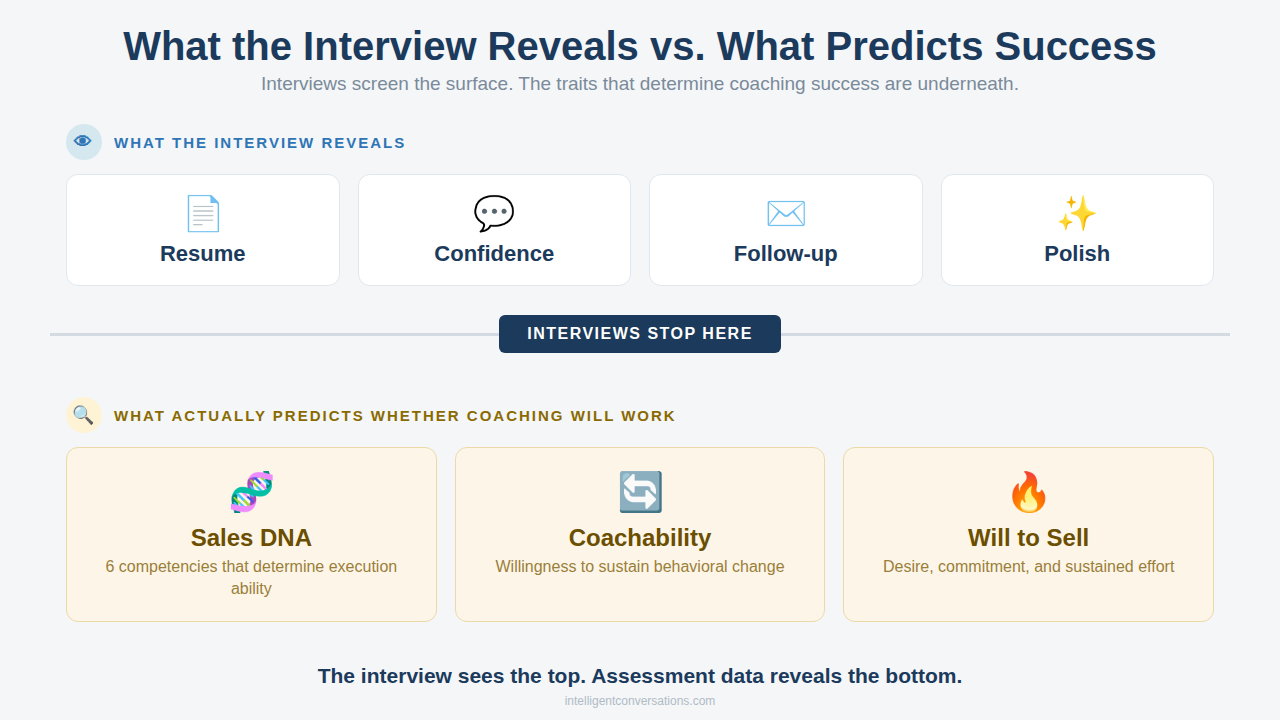
The pattern is consistent across industries and company sizes. The candidate interviews well. That should not be surprising. Salespeople interview well because interviewing is a sales conversation. They confirm appointments on time, send thoughtful follow-up emails, present with confidence and articulate their experience clearly.
For HR teams that evaluate sales candidates against the same standards used for other positions, this professionalism stands out. But in sales, that is table stakes. A mediocre salesperson who does the bare minimum of professional selling behavior can out-interview most non-sales candidates without even trying.
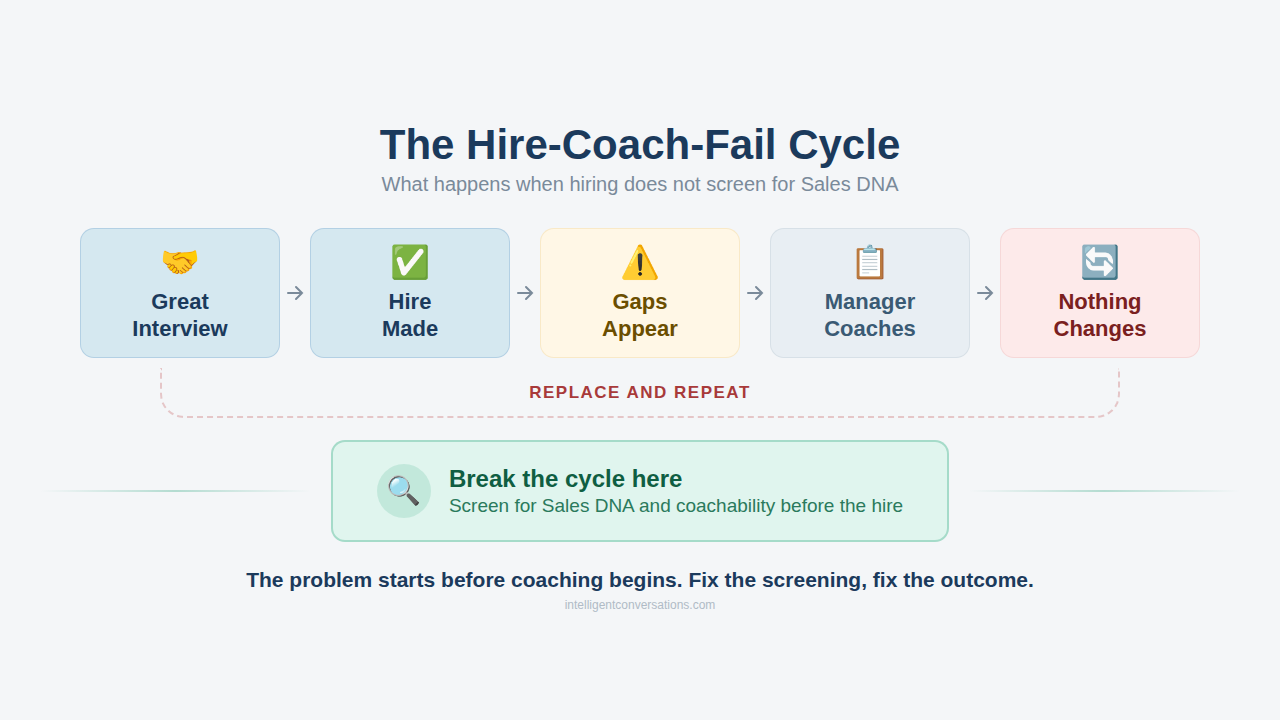
The interview passes. The hire is made. The first few weeks look fine. The new rep is learning the product, meeting the team, absorbing information. Everyone feels good about the decision.
Then the real selling starts, and the gaps appear.
|
What the Manager Expected |
What Actually Happens |
The DNA Issue Underneath |
|
Rep would prospect aggressively |
Rep avoids cold calls and waits for inbound leads |
Need for approval: outreach feels intrusive |
|
Rep would qualify the budget during discovery |
Rep asks surface questions and moves on |
Discomfort discussing money: going deeper feels rude |
|
Rep would push back on stalls and delays |
Rep accepts "let me think about it" without probing |
Non-supportive buy cycle: that response feels normal to them |
|
Rep would implement coaching feedback |
Rep agrees in the 1:1, then does the same thing next week |
Low coachability: compliance without change |
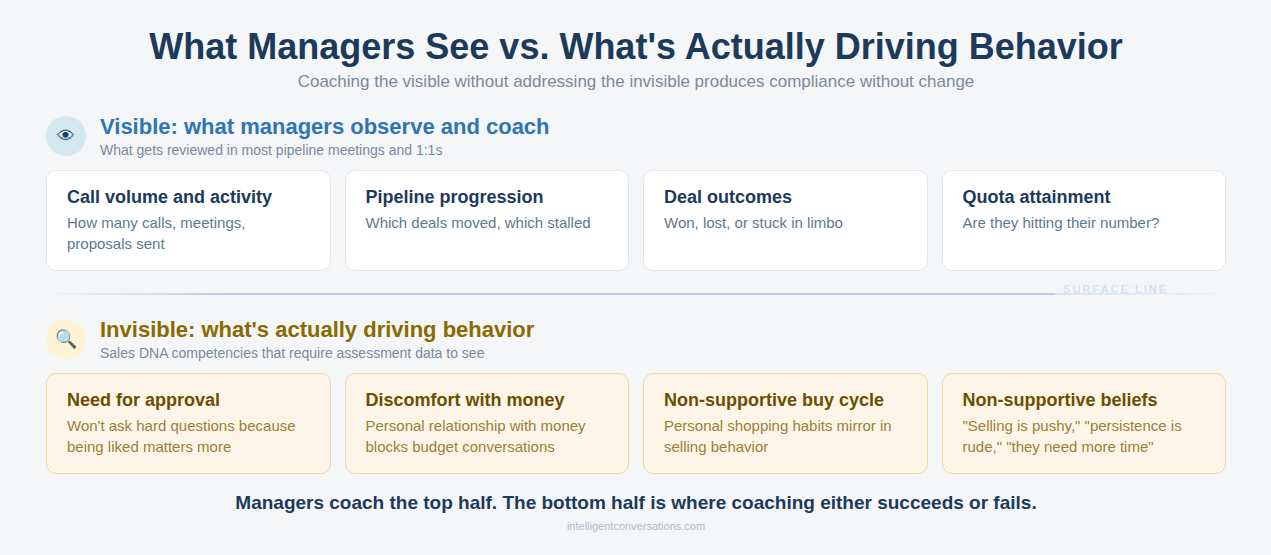
Every one of these traits was present before the hire was made. The interview was not designed to reveal them. The resume certainly did not reveal them. The candidate's polish and professionalism masked the DNA issues that only become visible under the pressure of actual selling.
What Is Coachability, and Can It Be Measured Before the Hire?
OMG measures coachability on a scale of 0 to 100 as part of their pre-hire sales evaluation. Below 75 is considered not coachable. That does not mean the person cannot learn anything. It means they are unlikely to sustain behavioral change based on coaching input. They may follow instructions for a week or two, but they will revert.
Coachability goes beyond willingness to listen. It is a combination of four things:
- Willingness to change. Will they actually do something differently, or just acknowledge the feedback?
- Genuine openness to feedback. Even when they disagree with it. Especially when they disagree with it.
- Ability to self-reflect. Can they look at their own behavior honestly, or do they externalize every failure?
- Commitment to implementation. Will they practice something uncomfortable until it becomes the new default?
A candidate can appear perfectly open to feedback during an interview ("Absolutely, I love learning and growing") and still score low on coachability. The assessment measures actual behavior patterns, not self-reported preferences.
Evidence-Based Interview Questions That Reveal Coachability
Generic questions like "Are you open to feedback?" produce generic answers. Everyone says yes. These questions dig deeper:
- "Give an example of feedback from a manager that you disagreed with but implemented anyway. What happened?"
- "What is one thing you are actively trying to improve right now in your selling? How are you working on it?"
- "Walk me through a recent deal review with your current manager. What did they push you on? What did you change as a result?"
If the candidate cannot provide specific, detailed answers with real examples, their coachability is likely lower than their interview demeanor suggests. Generalities like "I am always open to feedback" or "I love being coached" are red flags, not green lights.
When Is It a Coaching Failure vs. a Hiring Failure?
This distinction is critical because the response to each situation is completely different.
|
Coaching Failure |
Hiring Failure |
|
|
The rep's DNA |
Strong Sales DNA, adequate skills, reasonable coachability |
Weak Sales DNA, low coachability, non-supportive beliefs |
|
What it looks like |
Rep has the raw material but coaching is not reaching the right issues |
Rep agrees with feedback, reverts within two weeks, same patterns repeat |
|
What is going wrong |
Manager is coaching activity instead of mindset, trying to fix everything at once, or not coaching at all |
The rep cannot sustain behavioral change regardless of coaching quality |
|
The fix |
Better coaching. Focus on one development theme. Use DNA data to target the right issue. |
Acknowledge the hiring miss. Fix the screening process before the next hire. |
|
Timeline |
Improvement visible within one to two quarters |
No sustained improvement regardless of time invested |
Most leaders do not make this distinction because they do not have the data. Without Sales DNA assessment scores, every underperformer looks the same from the outside. The manager has no way to know whether investing more coaching time will eventually produce a breakthrough or whether the issue predates the hire entirely. They keep coaching and hoping. The rep keeps agreeing and reverting. Both sides lose time and confidence.

How Does This Connect to the Sales Hiring System?
Intelligent Conversations treats hiring and coaching as two stages of the same system. They are not separate problems to be solved by separate departments. A weak hiring process feeds uncoachable reps into the coaching pipeline. Then the coaching system gets blamed for not producing results.
The hiring system needs to screen for three things that most interview processes miss:
- Sales DNA: The six competencies (need for approval, stays in the moment, supportive beliefs, supportive buy cycle, comfortable discussing money, handles rejection) that determine whether a rep can execute the tactics they are taught.
- Coachability: Whether the rep is genuinely open to changing behavior based on feedback, data, and coaching over time.
- Will to Sell: Desire, commitment, outlook, motivation, and responsibility. The five factors that determine whether the rep will put in the sustained effort required, not just during the honeymoon period but over months and years.
When these three areas are screened before the hire, the reps who enter the coaching pipeline are actually coachable. Coaching works because it is being applied to people who can respond to it. Results improve not because the coaching is different, but because the people being coached are the right people. The system compounds rather than cycling through the same pattern of hire, coach, fail, replace.

Frequently Asked Questions
How do you tell the difference between a bad hire and a poorly coached good hire?
Assessment data makes the distinction clear. If the rep has strong Sales DNA, adequate coachability, and reasonable will to sell, the issue is likely coaching quality, management approach, or organizational infrastructure (unclear process, weak onboarding, inconsistent expectations). If the DNA and coachability scores are low, no coaching approach will produce lasting change. The data removes the guesswork that causes leaders to keep investing in reps who cannot respond to coaching.
Can you measure coachability before hiring someone?
Yes. OMG's pre-hire evaluation measures coachability on a 0 to 100 scale as part of a comprehensive sales-specific assessment. Combined with evidence-based interview questions that ask for specific examples of feedback taken, disagreements handled, and self-directed improvement, the hiring manager can get a reliable picture of coachability before the offer is extended.
What is the cost of coaching someone who should not have been hired?
The direct cost is the manager's time invested in coaching that will not produce returns. For a manager spending 4 to 6 hours per week on a single underperformer, that is 200 to 300 hours over a year that could have been spent developing reps who can actually improve. The indirect cost is the revenue the right hire would have generated. For customer-facing roles, a bad hire that persists for 6 to 12 months can cost 3 to 5 times their annual compensation when factoring in lost pipeline, damaged prospect relationships, and the rehiring cycle.





Before You Invest in Your Sales Team, Answer These 5 Questions
How do you know whether your next sales investment will actually produce a return?
Ready to Build a High-Performing Sales Team?
Let's create your custom Sales Transformation Program.